
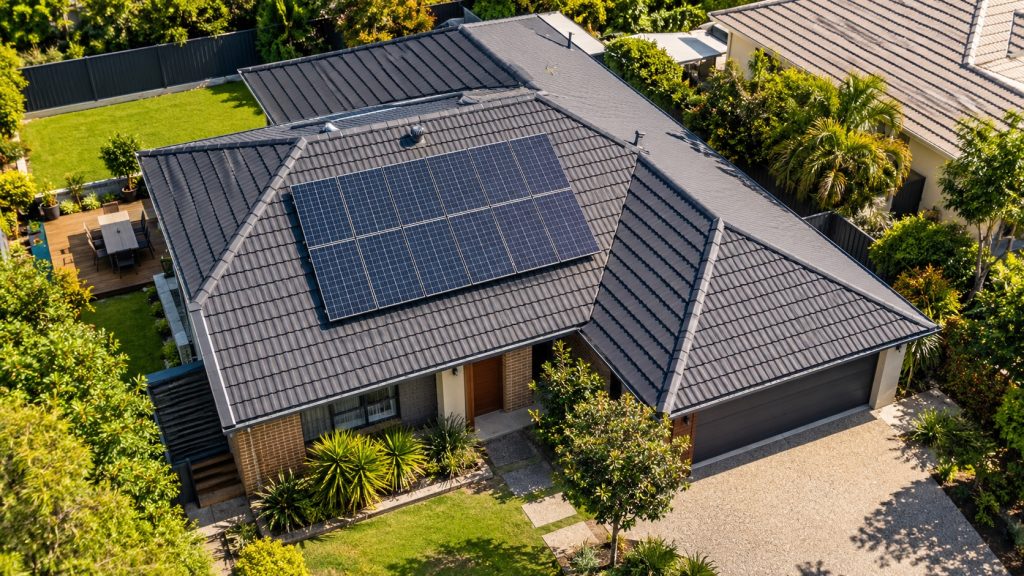
What size solar system do I need depends on your power use, timing, roof and local network rules. A neighbour with the same roof area may need a very different system because their routines, appliances and future plans differ.
The right answer is not a standard package or a guaranteed bill result. It is a household-based estimate that weighs electricity bills, sunlight, shade, tariffs, battery plans, EV charging and export limits.
I LOVE SOLAR helps households prepare this information and connect with suitable specialist suppliers, rather than installing systems itself. Outcomes still depend on usage, electricity plans, weather, system design, network approval and contract terms.
Use the guide below to prepare better questions, then confirm final details through a site visit and supplier quote. Check current rebate, certificate and network rules through official Australian Government, state government and local network sources before signing.
Key takeaways
- Start with daily use. Review seasons. Keep 12 months of bills.
- Match solar to routines. Shift flexible loads. Check evening demand.
- Check roof space. Allow for shade. Confirm network limits.
- Plan likely upgrades. Avoid distant guesses. Discuss EV charging.
- Compare assumptions. Read quote inclusions. Question zero-bill claims.
In this guide
- What does solar system size mean, and what information do you need?
- How do you estimate what size solar system you need?
- How do roof conditions, inverters and network rules affect solar size?
- Does a battery, EV or future electrification change the solar size you need?
- How do you compare solar proposals and choose a suitable supplier?
- To sum up
- Frequently asked questions
What does solar system size mean, and what information do you need?
Solar system size means the rated capacity of the panel array, measured in kilowatts (kW). What size solar system do I need also depends on electricity use in kilowatt-hours (kWh), which measures energy used over time.
A 6.6 kW array has panels rated at a combined 6.6 kW, but it will not produce that amount every hour. Bills, interval data, roof details, daytime routines, major appliances and future changes give a supplier a far better starting brief than panel count alone.
How do you read your electricity bills for solar sizing?
Electricity bills usually show average daily use in kWh, often near the usage summary. Gather at least 12 months of bills because summer cooling, winter heating and household routines can change demand.
Note air conditioning, electric hot water, pools, spas, home offices and electric cooking. Smart-meter interval data, often recorded every 15 or 30 minutes, shows when the home uses power.
| Checklist item | What to collect |
|---|---|
| Usage history | 12 months of bills and average daily kWh |
| Timing | Daytime, evening and overnight use |
| Major loads | Heating, cooling, pools, hot water and EVs |
| Future changes | Likely appliances, renovations or extra occupants |
Why does the time you use electricity matter as much as total use?
Solar panels make most electricity during daylight, usually near midday. Self-consumption means using that solar power inside the home as it is made.
A work-from-home household may use more solar directly than a home empty until evening. Timers can move pool pumps, dishwashers and controlled hot water into sunny hours.
Exported power may earn less than the cost of electricity bought from the grid. Your retailer’s usage rates, feed-in tariff and supply charge all affect that comparison.
How do you estimate what size solar system you need?
Estimating what size solar system do I need starts with household demand, solar timing and roof conditions. It should produce a planning brief, not a fixed package or a promise about savings.
A common mid-sized array may suit some Australian homes, yet it may be too large for low daytime use or too small for future electrification. SunSPOT, developed with the University of New South Wales, Australian Photovoltaic Institute and Australian Government support, can provide an independent starting estimate.
A practical solar sizing method for Australian households
A practical answer to what size solar system do I need uses a rooftop solar sizing guide that considers household electricity use, budget and usable roof area. Panel capacity should not match daily kWh use one-for-one because generation changes through the day.
| Step | Action |
|---|---|
| 1 | Gather bills and interval data where available |
| 2 | Split use into daytime, evening and overnight periods |
| 3 | List major appliances and flexible loads |
| 4 | Check roof space, direction and visible shade |
| 5 | Review local solar generation estimates |
| 6 | Check electricity rates, feed-in tariffs and supply charges |
| 7 | Add likely future electricity loads |
| 8 | Confirm site, electrical and network details with a qualified supplier |
A calculator result is a planning signal, not a final design. Check current Small-scale Renewable Energy Scheme rules through the Australian Government SRES information page before accepting a proposal.
Which household solar profile is closest to yours?
Household profiles give a useful starting point for what size solar system do I need. They are not fixed recommendations because roof space, climate, electricity plans and usage timing still vary.
| Household profile | Starting discussion |
|---|---|
| Low-use home | Limited daytime demand and modest future loads |
| 2 adults at home | Home office, daytime cooling or regular appliance use |
| Family home | Heating, cooling, cooking and several loads at once |
| High-use home | Pool, electric hot water, EV charging or major upgrades |
A mid-sized system may be worth exploring for some homes, but it is not automatic. Reverse-cycle air conditioning, heat-pump hot water, induction cooking and another occupant can change the brief.
The aim is useful household demand, not filling every roof surface. A supplier should explain why each extra panel has a place in the proposed system.
How do roof conditions, inverters and network rules affect solar size?
Roof conditions, inverter limits and network rules can change what size solar system do I need after bill data is reviewed. Usable solar roof area is smaller than the full roof area when shade, access and obstructions are included.
The local distribution network service provider, or DNSP, can also limit inverter capacity or grid exports. Those limits can affect the value of extra panels, especially where the home uses little power during daylight.
What roof factors can limit solar generation?
Roof direction, pitch, shade, condition and access all affect solar generation. Skylights, vents, chimneys, ridges and safety clearances can reduce usable panel space.
Shade also changes across the day and through the seasons. A smaller unshaded array can produce more useful energy than a larger array under trees or beside tall buildings.
Panels may sit on more than one roof face to spread output across morning and afternoon. A supplier needs to confirm roof and site conditions before finalising the layout.
Why are panel capacity, inverter size and export limits different?
Panel capacity usually refers to direct-current, or DC, panel capacity. The inverter changes that power into alternating-current electricity for household use and grid export.
For example, a 6.6 kW panel array may connect to a 5 kW inverter within the maker’s limits. Clipping occurs when panels could make more power than the inverter can convert at that moment.
Single-phase homes and 3-phase homes can have different connection allowances. An inverter connection limit is not the same as an export limit, and dynamic export limits can change allowed exports at different times.
Ask what happens to spare solar power once the export limit is reached. It may charge a battery, run household loads or be curtailed if there is nowhere else for it to go.
Does a battery, EV or future electrification change the solar size you need?
Batteries, EVs and electric appliances can change what size solar system do I need because they change both demand and timing. More equipment does not automatically mean the biggest possible solar array or battery is the right choice.
A sound brief separates likely upgrades from distant ideas. It also sets realistic expectations about backup power, energy independence and zero-bill offers, which always depend on the final system and electricity plan.
When does a battery change the solar sizing conversation?
A battery stores some spare daytime solar electricity for later use. Battery planning should start with evening demand, overnight use, current exports, tariffs, budget and backup expectations.
Nominal capacity is the battery’s total stated storage, while usable capacity is the portion available in normal operation. Battery power output in kW shows how much electricity it can deliver at once.
A battery does not automatically run the whole home during a blackout. Backup depends on the selected equipment, supported circuits, battery charge and system settings.
How should you plan for an EV and other future loads?
An EV changes solar planning according to driving distance, charging frequency and charging time. A vehicle charged at home during daylight creates a different brief from one charged overnight.
Also list likely heat-pump hot water, air conditioning, electric cooking, pool, spa and extension plans. Ask about spare inverter capacity, switchboard limits, battery compatibility and future network approval.
Solar plus a battery does not automatically remove supply charges, grid imports or every electricity bill. What size solar system do I need should reflect likely household changes, rather than every possible future purchase.
How do you compare solar proposals and choose a suitable supplier?
Comparing solar proposals means comparing assumptions, equipment and site conditions, not only price. What size solar system do I need becomes clearer when every supplier uses the same household information.
Ask for three detailed proposals where practical, then check each one against your bills, roof layout, usage timing and future plans. Be careful with payback, savings and zero-bill statements that do not show their conditions.
What should a clear solar quote include?
A clear solar quote shows the proposed equipment, expected output and financial assumptions. It should also state what needs site confirmation and what sits outside the quoted price.
| Quote item | Details to compare |
|---|---|
| Panels | Total kW, panel count and wattage |
| Inverter | Model, capacity and panel-to-inverter ratio |
| Battery | Usable kWh, power output and backup scope |
| Roof | Layout, direction and shade assumptions |
| Energy model | Generation, self-use, imports and exports |
| Electricity plan | Usage rates, feed-in tariff and supply charges |
| Network | Export limit, approval and control equipment |
| Inclusions | Warranties, monitoring and excluded work |
Different results can come from different assumptions, not necessarily better equipment. Ask suppliers to show how they treated shade, panel losses, export limits, battery losses and seasonal demand.
How can I LOVE SOLAR help you prepare for supplier conversations?
I LOVE SOLAR helps organise bills, routines, major loads, roof details and future plans into a clearer household brief. Its solar calculator and appliance calculator can support the next supplier conversation.
Calculator results depend on the details entered and need confirmation through a property inspection and supplier quote. The service connects households with suitable specialist suppliers, but it does not install systems or make the supplier’s final technical decision.
Focus on the reasoning behind each proposal, not only brands or headline price. A clear explanation of what size solar system do I need is more useful than a generic package label.
To sum up
The right solar system fits current electricity use, usage timing, roof conditions, likely future loads and local network rules. The largest system, highest feed-in tariff or lowest advertised price may not produce the best household outcome.
Gather bills, interval data, appliance details and future plans before seeking proposals. You can discuss your postcode, energy use and goals through I LOVE SOLAR, while final design and outcomes still need supplier and site confirmation.
Frequently asked questions
Solar questions often depend on weather, system settings and household routines. The answers below set practical expectations, but a supplier must confirm property-specific details.
Do solar panels work on cloudy days?
Yes, solar panels still generate electricity on cloudy days, but output is usually lower than in strong sunshine. Production depends on cloud cover, season, roof direction, shading and the final system design.
Can I use solar power during a blackout?
Usually not with standard grid-connected solar alone, because it shuts down during an outage for safety. Backup needs suitable battery equipment, and it may only support selected circuits rather than the whole home.
Can solar power run my air conditioner?
Solar can help run air conditioning during sunny daytime hours. Output depends on solar size, air-conditioner demand, weather and other household loads, while evening cooling may need grid or battery energy.
Will solar panels still be useful if I am away from home during the day?
Yes, solar can still reduce bills through exports, although direct daytime use is often worth more. Shift flexible loads where practical and assess a battery against costs, tariffs and evening demand.
Can I add more solar panels later?
Possibly, but expansion depends on roof space, inverter capacity, panel compatibility, switchboard capacity and network approval. Raise likely future loads before the first installation because later additions can face different costs and limits.
1 Comment. Leave new
[…] for panel, inverter, mounting and battery brands, exact models, quantities and ratings. Panel array size in kW differs from inverter output, and both figures affect expected generation and future […]